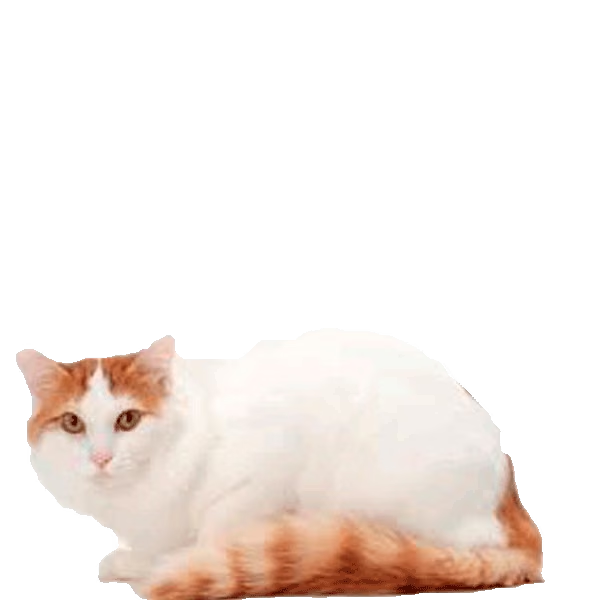
The Turkish Van is a powerful, water-loving breed known for its active, playful nature and famously affectionate devotion to family.
How the Turkish Van coat is built, and what that means when you groom it.
Caution: A Turkish Van coat mats easily.
Fine or long hair tangles at the base of the coat, out of sight, where the mats tighten and pull on the skin. Brushing has to reach right down to the roots in sections, not just skim the surface.
Information: A Turkish Van drops its undercoat in heavy bursts.
The undercoat comes out in heavy bursts over a few weeks. An undercoat rake, or a bath followed by a proper blow-dry, clears it far faster than daily brushing. Clipping the coat down is not a shortcut for this.
The Turkish Van is a large, semi-longhaired cat from eastern Anatolia with a distinctive pattern, a natural affinity for water, and an energetic, curious character suited to engaged owners.
Ireland is an island defined by water. Atlantic rain shapes its landscape, its culture, and the daily life of everyone who lives here. It is a fitting home, then, for a cat that evolved beside a lake. The Turkish Van developed over centuries along the shores of Lake Van in eastern Anatolia, a vast inland body of water that sits at over 1600 metres above sea level. The breed's well-documented willingness to wade, swim, and play in water is not a quirk bred in by humans but a trait that emerged naturally from its environment. That same relationship between a cat and its surrounding waters gives the Turkish Van an unusual resonance with Irish sensibility.
The Irish Cat Association (ICA) recognises the Turkish Van as a full championship breed. In Ireland, the breed is valued for its intelligence and physical vitality, and it attracts owners who want a cat that is genuinely interactive rather than decorative. The Van is not a lap cat in the conventional sense. It is alert, opinionated, and physically capable, and it does best in a household that can meet those qualities with patience and engagement.
| Characteristic | Detail |
|---|---|
| Origin | Eastern Anatolia, Turkey |
| Weight | 4-8 kg |
| Coat | Semi-longhaired, single-layer, cashmere-like texture |
| Colour | White body with coloured markings on head and tail |
| Lifespan | 13-17 years |
The Turkish Van suits owners who are at home regularly and can provide consistent company. In smaller Irish homes and apartments, the breed adapts well provided it has vertical space and daily interactive play. It is not a good match for households that want a very quiet, low-energy companion. Irish winters spent indoors suit the Van provided the environment is stimulating. The cat's single-layer coat, despite its length, is low-shedding by breed standards and does not mat easily, which is a practical advantage in the Irish climate where outdoor access may be limited during wetter months.
The Turkish Van has ancient roots in eastern Anatolia and reached Ireland through the British cat fancy, gaining ICA recognition in the decades following GCCF acceptance.
The Turkish Van's history begins in the highlands surrounding Lake Van in eastern Turkey, a remote region where the breed developed in geographic isolation over many centuries. The cats were known locally and were kept by communities in the area, but they remained largely unknown to the wider world until the mid-twentieth century.
In 1955, British photographers Laura Lushington and Sonia Halliday encountered the cats during a trip to Turkey. They brought two examples back to the United Kingdom, and Lushington spent the following years developing a breeding programme. The Governing Council of the Cat Fancy (GCCF) granted the breed preliminary recognition in 1969 and full championship status in 1979. That GCCF pathway was the primary channel through which the Turkish Van entered the British Isles cat fancy, including Ireland.
Ireland's cat fancy developed in close alignment with the broader UK structure, and the Irish Cat Association drew on GCCF standards and registration practices as it established its own framework. The Turkish Van entered Irish breeding circles through importation from UK catteries in the years following GCCF full recognition. ICA-registered Turkish Vans have been shown at Irish cat shows since the 1980s, though the breed has always remained a minority breed in Ireland rather than a commonly kept household cat.
The post-Brexit period introduced additional administrative steps for importing registered cats from Great Britain, and prospective owners in Ireland now typically source Turkish Vans through ICA-affiliated breeders, a small number of whom maintain active programmes. European breeders, particularly in the Netherlands and Germany where the Turkish Van has a stronger following, also supply cats to Irish owners through EU import channels.
The Turkish Van is a large, muscular cat with a distinctive white coat and coloured markings confined to the head and tail, known as the Van pattern.
The Turkish Van is one of the larger domestic cat breeds. Adult males are substantially built, with broad chests and strong hindquarters that give them a physical presence distinct from most other semi-longhaired breeds. Females are noticeably smaller but share the same athletic, muscular structure. The body is long and the legs are well-proportioned, with large round paws that historically helped the cats navigate rocky shoreline terrain.
The coat is the breed's most distinctive physical feature. It is semi-long, single-layered, and has a texture often compared to cashmere or silk. The absence of a dense undercoat means the coat lies close to the body, does not mat readily, and sheds less than many longhaired breeds. In summer the coat thins considerably, giving the cat a shorter-coated appearance. The full winter coat returns as temperatures drop.
| Feature | Description |
|---|---|
| Body type | Long, muscular, large-boned |
| Head shape | Moderately wedge-shaped with a broad forehead |
| Eyes | Large, oval, amber or blue; odd-eyed examples occur |
| Tail | Full, brush-like, coloured in the Van pattern |
| Coat texture | Silky, single-layer, no woolly undercoat |
The Van pattern is the defining feature of the breed's appearance. The body is predominantly chalk-white, with colour restricted to the tail and to markings on the head, typically above the eyes and around the ears. The standard permits a small number of body spots, though a largely clean white body is preferred. The colour itself may be red, cream, black, blue, or tortoiseshell, among other accepted varieties.
Odd-eyed Turkish Vans, with one amber and one blue eye, are considered particularly striking within the cat fancy. White cats with odd or blue eyes can carry a gene associated with deafness on the blue-eyed side, and reputable breeders test for this. Prospective owners should ask breeders specifically about hearing tests when considering a blue-eyed or odd-eyed kitten.
The Turkish Van is an energetic, independent, and highly intelligent cat that forms strong bonds with its household but prefers interaction on its own terms.
The Turkish Van is not a placid or decorative cat. It is curious, vocal when it wants attention, and physically active well into adulthood. The breed retains a strong hunting instinct and the kind of problem-solving drive that makes an under-stimulated Turkish Van a creative and sometimes destructive presence in a home. These are cats that will open cupboards, carry objects around, and interrupt whatever their owners are doing with considerable persistence.
Despite this energy and independence, Turkish Vans form genuine attachments. They tend to select one or two people in a household as primary companions and are consistent in seeking out those individuals for play and proximity. They are generally not cats that enjoy being held or restrained, but they will sit close, follow people through the house, and are often vocal in a conversational way.
| Trait | Typical expression |
|---|---|
| Energy level | High; active daily, including in senior years |
| Sociability with people | Selective but loyal to chosen household members |
| Compatibility with children | Good with older children who respect the cat's boundaries |
| Compatibility with other pets | Variable; early socialisation improves outcomes with dogs and cats |
| Tolerance of handling | Low; prefers self-directed contact over being picked up |
Turkish Van care in Ireland centres on managing an active indoor cat through consistent grooming, structured exercise, and an environment that compensates for limited outdoor access.
In Ireland, most Turkish Vans are kept as indoor or indoor-outdoor cats with supervised access to the outdoors. The Irish climate, with its frequent rain and mild but grey winters, means that many cats choose to remain indoors for extended periods. A Turkish Van kept primarily indoors requires a more deliberately structured environment than most other breeds, because its high activity level and curiosity do not diminish simply because the weather discourages outdoor exploration. Irish owners in smaller urban homes or apartments should plan for this before acquiring the breed.
The Turkish Van's single-layer coat is notably easy to maintain compared with other semi-longhaired breeds, but it still requires regular attention, particularly in the damp Irish climate where coats can trap moisture and debris more readily.
The Turkish Van needs genuine daily exercise rather than passive enrichment alone. Providing a range of play opportunities prevents boredom-related behaviour problems.
An indoor Turkish Van in an Irish home during the wetter months needs an environment designed to compensate for reduced outdoor stimulation. Window perches positioned to give views of gardens or streets, bird feeders placed within sight of a window, and a consistent rotation of interactive toys all help maintain the cat's mental engagement. In smaller homes, vertical space is more valuable than floor space: a well-placed cat tree or a set of wall-mounted shelves gives the cat territory without requiring additional floor area. Grey Irish winter days can reduce a cat's activity naturally, but Turkish Vans remain more active than average even in low-light conditions, so environmental enrichment should remain consistent year-round.
The Turkish Van is a large, muscular breed that requires a high-protein diet matched to its life stage and activity level, with portion control to prevent weight gain in less active indoor cats.
The Turkish Van's large frame and high energy output mean it has greater caloric needs than many smaller breeds. The breed is not prone to obesity when kept active, but indoor cats with limited exercise can gain weight, which places strain on joints and organs. Feeding amounts should be calculated against the cat's actual weight and activity level rather than following general packet guidance.
| Life stage | Amount per day | Meals per day |
|---|---|---|
| Kitten (under 12 months) | Unrestricted kitten food or as advised by vet | 3-4 |
| Junior adult (1-3 years) | 60-80 g dry or 200-240 g wet | 2-3 |
| Adult (3-10 years) | 55-75 g dry or 180-220 g wet | 2 |
| Senior (10 years and over) | 50-65 g dry or 160-200 g wet | 2-3 |
A diet based primarily on high-quality wet food or a combination of wet and dry food suits the Turkish Van well. The protein source should be named meat or fish rather than generic animal derivatives. Turkish Vans are not more prone to food allergies than other breeds, but individual sensitivities do occur and may present as coat changes or digestive irregularity. If these symptoms appear, a transition to a novel protein source under veterinary guidance is the appropriate first step. Fresh water must be available at all times regardless of diet type.
The Turkish Van is a generally robust breed with a relatively low prevalence of hereditary disease, though deafness linked to coat colour and cardiac screening are relevant for prospective owners.
The Turkish Van developed through centuries of natural selection in a geographically isolated environment, and the breed carries a lower burden of hereditary disease than many breeds developed through more intensive selective breeding programmes. Irish owners benefit from sourcing cats through ICA-registered breeders who provide health screening documentation, as this is the most reliable way to assess the health profile of a specific lineage.
| Condition | Prevalence | Screening available |
|---|---|---|
| Hereditary deafness (linked to white coat and blue eyes) | Moderate in odd-eyed or blue-eyed individuals | BAER hearing test |
| Hypertrophic cardiomyopathy (HCM) | Low but documented in the breed | Cardiac ultrasound |
| Obesity (in low-activity indoor cats) | Moderate risk without portion management | Regular weight monitoring |
Annual veterinary check-ups provide the baseline for monitoring a Turkish Van's health across its lifespan. The breed's lifespan of 13-17 years means owners are committed to a long-term relationship that benefits from consistent veterinary oversight. Vaccinations, parasite control, and dental care are standard requirements. Turkish Vans do not have a breed-specific dental disease pattern, but dental hygiene is often neglected in cats generally; tooth brushing or dental treats from an early age reduce the risk of periodontal disease in later life.
The Turkish Van is intelligent enough to learn a range of behaviours through reward-based training, and the breed responds better to structured sessions than to correction-based approaches.
Turkish Vans are among the more trainable domestic cat breeds, not because they are eager to please in the way a dog might be, but because they are highly responsive to reward and genuinely interested in novel tasks. The breed's curiosity and problem-solving tendency means it engages with training exercises readily, particularly when the reward is food or play. Owners who approach training with patience and consistency will find the Turkish Van a capable and willing student.
Clicker training is an effective method for Turkish Vans. The marker signal is clear, and the breed learns to associate the click with a reward quickly. Basic behaviours to train early include recall to a specific location, accepting handling of paws and ears (which assists with grooming), and use of a carrier without stress. These practical skills pay dividends throughout the cat's life, particularly during veterinary visits.
Training sessions should be short, ideally three to five minutes, and run before mealtimes when the cat is motivated by food. Ending every session on a successful behaviour maintains the cat's positive association with training. Turkish Vans can lose interest rapidly if sessions become repetitive, so varying the task within each session keeps engagement high.
Harness training is worth considering for Irish Turkish Van owners who want to offer their cat outdoor experience without free-roaming access. The breed is physically capable and curious enough to adapt to leash walking, provided the harness introduction is gradual and entirely reward-based. Begin indoors with the harness worn for short periods paired with treats, progress to the harness with a lead attached indoors, and only move outdoors once the cat is relaxed in both. This process may take several weeks, and patience is more important than speed.
Turkish Van breeding in Ireland is conducted by a small number of ICA-registered breeders, with the breed requiring careful health testing and responsible pairing to maintain genetic diversity.
Turkish Van breeders in Ireland operate within a small community, and the breed's gene pool in the country is limited compared with the UK or continental Europe. ICA-affiliated breeders follow the GCCF and FIFe standards as reference points, and responsible breeders conduct BAER hearing tests and cardiac screening before using cats in a breeding programme. Given the relatively small number of active Turkish Van breeders in Ireland, maintaining genetic diversity requires collaboration with UK and European breeders, which in the post-Brexit context involves navigating updated import documentation for cats moving between Great Britain and Ireland.
| Parameter | Typical value |
|---|---|
| Sexual maturity (female) | 7-12 months, though breeding is deferred until 12-18 months |
| Litter size | 3-6 kittens |
| Gestation period | 63-67 days |
| Weaning age | 8-10 weeks |
| Minimum age at new home | 12-13 weeks, with vaccinations |
| Recommended health tests before breeding | BAER hearing test, cardiac ultrasound, general health screen |
No law covers cat chips in Ireland, which makes a free United Pet Club record the only thing standing behind your Turkish Van's number.
An ISPCA branch or a vet scanning a found Turkish Van gets exactly as far as her record allows. Give the scan somewhere to land: a free profile with your name, your number, and her photo. Register your cat once and it holds for good.
The fifteen digits on your Turkish Van's vet paperwork want a registry. United Pet Club lodges them free, keeps them current through every move, and leaves the record findable whenever a scanner asks. Microchip registration plus a free account: both sorted in one cup of tea.
Open a free United Pet Club account, put in her name, colouring, and a photo, and save the profile. It stays live for the whole of her life at no cost, and a chip is not needed to begin.
Lodge the fifteen digit number from the vet's paperwork in your free account with your current contact details. The lifetime plan never asks for a penny, not for the record and not for updates.
No, the 2015 chipping law covers dogs only. That is exactly why a registered chip matters for a Turkish Van: without your record, there is nothing at all connecting her number to your phone.
Nothing whatsoever. United Pet Club's lifetime plan takes care of the profile, the chip record, and every amendment, free for the whole of her life.
Answers to the questions most commonly asked by people in Ireland considering or owning a Turkish Van.
Your kitten's breeder should provide transfer papers from the ICA or a reciprocal recognised registry such as the GCCF. You submit the transfer form with the applicable fee to the ICA to record your ownership. If the breeder is not ICA-affiliated, your cat cannot be registered with the ICA, which limits options for showing and formal breeding. Always confirm registration status before purchasing a kitten.
Yes, but the process requires additional steps compared with pre-Brexit importation. Cats moving from Great Britain to Ireland require a valid animal health certificate (AHC) issued by an Official Veterinarian in Great Britain within ten days of travel. The cat must be microchipped, vaccinated against rabies, and the AHC must accompany the cat at the point of entry. EU pet passport documents issued in the UK are no longer valid for entry into Ireland. Contact the Department of Agriculture, Food and the Marine for current requirements, as these can be updated.
Prices from ICA-registered breeders in Ireland typically range from 800 to 1,400 EUR for a pet-quality kitten. Show-quality kittens or those from lines with championship titles may be priced higher. Be cautious of kittens advertised at prices well below this range, as reputable breeders incur significant costs for health testing, veterinary care, and ICA registration that are reflected in the kitten price.
A Turkish Van can live comfortably in a smaller home provided the environment is well set up. The key is vertical space rather than floor area. A tall cat tree, wall-mounted shelves, and window perches give the cat territory and activity options. Daily structured play is non-negotiable in a smaller space. The breed does not need a garden to thrive, but it needs consistent engagement from its owners and an environment that offers variety.
Most Turkish Vans do show interest in water, ranging from dipping paws in a water bowl to attempting to join a bath or shower. In an Irish home this rarely causes practical problems, though owners should expect a cat that investigates water left in sinks, glasses, or pet water bowls with more curiosity than most breeds. A pet water fountain satisfies much of this interest and also encourages the cat to drink more, which is beneficial for urinary health.
Turkish Vans get along well with older children who understand how to interact with a cat respectfully. The breed dislikes being held tightly or restrained and will disengage from rough handling. With children who are patient and willing to let the cat set the terms of interaction, Turkish Vans can be engaged and affectionate companions. Very young children may find this cat unpredictable if they attempt to pick it up without warning.
The most effective approach is a combination of timed feeding through puzzle feeders, two daily interactive play sessions with wand or feather toys, a window perch with an outdoor bird feeder visible from it, and weekly introduction of a new object or toy to explore. Rotation matters more than quantity: five toys rotated weekly provide more stimulation than twenty left out permanently. Some Turkish Vans also engage with cat-specific video content on a screen, which can provide brief distraction during quiet periods.
