
Dog training techniques that actually work, compared
How reward based training, clicker work, crate and leash training, and socialization fit together, plus how to structure a session so the training actually sticks.
United Pet Club@UnitedPetClub6 min read

Dog training works best when it combines four things: positive reinforcement, a marker signal such as a clicker, a predictable daily routine, and repeated low pressure exposure to new people and places. Most owners see real progress in a few weeks by picking one or two of these methods and using them consistently, rather than switching approaches every time results feel slow. The right technique also depends on the dog in front of you: a nervous rescue and a bold ten week old puppy need different starting points even though the end goal, a calm and responsive dog, looks the same.
This guide walks through the methods that hold up across breeds and ages: reward based training, clicker work, crate and leash training, and socialization. It also covers how to structure a session so a dog actually learns instead of just getting tired and checking out. For the theory behind why reward based methods work, or a focused walkthrough for teaching a single new command, see our science of positive reinforcement piece and our step by step positive reinforcement training plan.
Reward based training is the starting point for almost everything
Reward based training means marking the behavior you want the instant it happens and following it with something the dog values: food, a toy, or access to whatever they want to do next. It works because dogs repeat behavior that pays off, and it breaks down when the reward arrives too late for the dog to connect it to the action.
A few habits separate reward based training that sticks from reward based training that stalls. Reward the behavior the moment it happens, not two seconds later once the dog has already wandered off to sniff something else. Keep your criteria the same from one repetition to the next: if sitting for a treat means a straight, still sit today, do not accept a half sit tomorrow because you are in a rush. Fade the food gradually once the dog reliably offers the behavior, replacing it with praise, play, or simply moving on to the next fun thing, so the dog is not permanently dependent on a treat pouch.
None of this requires harsh corrections. A dog that gets it wrong usually just has not learned the criteria yet, which is not the same thing as being defiant.
| Method | Best for | Typical session length | Core tool |
|---|---|---|---|
| Reward based training | New commands, everyday obedience | 5 to 10 minutes | Treats or a toy |
| Clicker training | Precise or complex behaviors and tricks | 5 to 10 minutes | Clicker plus treats |
| Crate training | Housetraining, safe alone time, travel | Ongoing, in short blocks | Properly sized crate |
| Leash training | Loose leash walking | Every walk, 10 to 20 minutes of focused practice | Front clip harness or flat collar |
| Socialization | Confidence around people, dogs, new places | 15 to 30 minutes, several times a week | None, just varied environments |
Clicker training adds precision when timing matters
A clicker solves a specific problem. Reward based training only works if the dog knows exactly which action earned the treat, and a human voice is slower and less consistent than a mechanical click. The click marks the instant of correct behavior, then the treat follows a second or two later, so the dog does not need the food to arrive immediately to understand what worked.
Load the clicker before using it for anything real: click, then treat, ten or fifteen times in a row with nothing else going on, until the dog's head turns toward you the moment they hear the sound. From there, use it to mark small pieces of a bigger behavior. Teaching a dog to touch a target, spin, or hold a stay all move faster with a clicker than without one, because the dog gets clean, immediate feedback on the exact moment they got it right.
Clicker training is optional. Plenty of well trained dogs never see one. It earns its place for owners teaching several new tricks at once or working through a stubborn plateau on an existing command.
Crate and leash training solve two different everyday problems
Crate training and leash training get grouped together because both involve equipment, but they solve unrelated problems. A crate gives a dog a den like space that helps with housetraining, since dogs generally will not soil where they sleep, along with safe alone time and calmer travel. Leash training solves the walking problem: a dog that pulls, lunges, or ignores its owner outdoors.
Introduce a crate by feeding meals inside it with the door open, then gradually build up alone time in short blocks while you are still home. Most dogs accept a properly sized crate within one to two weeks as long as it is never used as punishment. For housetraining specifically, a consistent bathroom schedule outside the crate matters just as much as the crate itself.
For leash walking, the fix that works for most dogs is simple: stop moving the instant the leash goes tight, and only start again once it goes slack. This costs you a slow first few walks but teaches the dog that pulling gets them nowhere while walking calmly keeps the trip moving. A front clip harness reduces pulling power for dogs that have already practiced pulling for months, which buys you time while the training catches up.
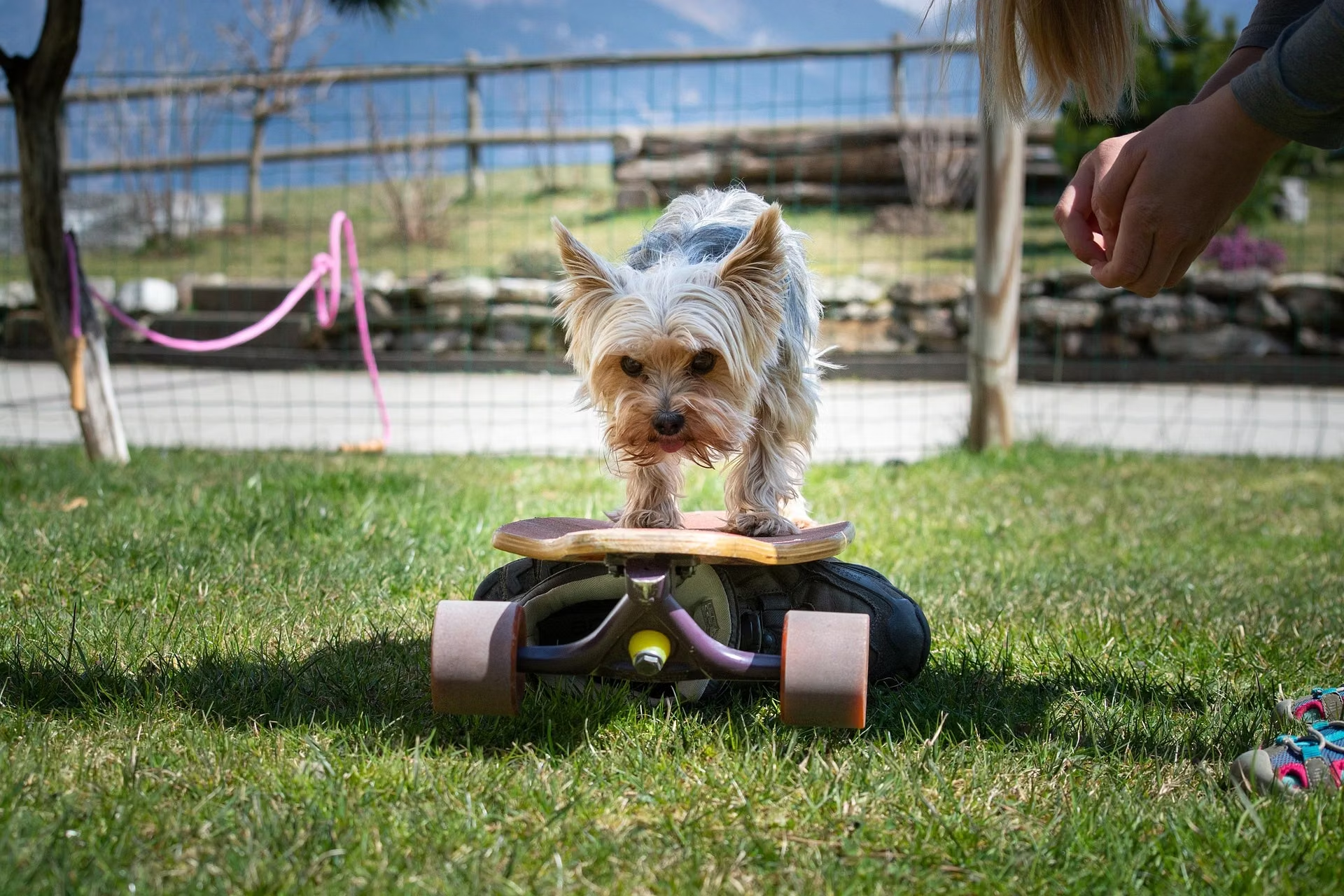
Socialization prevents problems training alone cannot fix
Socialization means giving a dog calm, positive exposure to the people, animals, sounds, and places it will encounter as an adult, ideally starting as soon as a vet clears the puppy for it. A dog that never meets strangers, other dogs, or a vacuum cleaner as a puppy is far more likely to react with fear or aggression to those same things later, no matter how good its obedience training is.
Good socialization is not about flooding a dog with every experience at once. Introduce one new thing at a time, keep the first exposure short, and let the dog choose to approach rather than forcing contact. A puppy that gets to sniff a stranger's shoes from three feet away and walk off unbothered had a better socialization experience than one dragged over to be petted.
This matters just as much for adult dogs adopted with an unknown history. Go slower, watch body language closely (our guide to canine body language breaks down what to look for), and treat every calm interaction as a win worth rewarding.
Structuring a session so the training actually sticks
Short, frequent sessions beat long, occasional ones for almost every dog. Five to ten minutes, once or twice a day, keeps the dog engaged and avoids the frustration that builds when a session drags on past the point where the dog is still having fun. End each session on a behavior the dog already knows well, so the last thing that happens is a win and a reward, not a struggle.
Consistency across the household matters more than any single technique. If one person rewards a dog for jumping up in greeting and another pushes the dog off and says no, the dog gets mixed signals and progress stalls no matter which method you are using. Agree on the rules, the cues, and the rewards before you start, and have everyone in the house use the same word for the same behavior.
If a dog is not making progress after several weeks of consistent practice, or if the issue involves aggression, resource guarding, or severe fear, that is a sign to bring in a certified trainer or veterinary behaviorist rather than pushing harder alone. Persistent behavior problems usually have an underlying cause worth diagnosing properly; our guide to common dog behavior issues covers when a problem has moved past what basic technique adjustments can fix. New owners setting up a routine for the first time may also want our new pet owner guide for the basics that make all of this easier.
How long does it take to train a dog?
Basic commands like sit and come typically take two to four weeks of daily five to ten minute sessions to become reliable at home. Reliability in distracting environments like a park or a busy sidewalk takes longer, often two to three months of regular practice. Puppies and newly adopted adult dogs both benefit from patience over speed, since rushing tends to produce shaky, inconsistent behavior rather than a dog that truly understands the cue.
Is clicker training necessary or can I just use my voice?
A clicker is not necessary. It helps because a mechanical click is more consistent in timing and tone than a human voice, which makes it easier for a dog to pinpoint the exact moment they did something right. A verbal marker word said the same way every time works for most owners and most dogs just as well, especially once basic obedience is already underway.
What is the best age to start training a puppy?
Start as soon as a puppy comes home, usually around eight weeks old. Basic manners, name recognition, and gentle handling exercises can begin immediately, while structured socialization outings should wait until a veterinarian confirms the puppy has enough vaccine coverage for the environments you plan to visit.
Why does my dog listen at home but not outside?
A dog that only responds at home has learned the cue in one specific, low distraction environment rather than as a general skill. Practice the same commands in gradually more distracting locations, starting in the backyard, then a quiet street, then a busier park, rewarding heavily at each new stage until the behavior transfers.
Do I need to keep giving treats forever?
No. Once a dog reliably performs a behavior, thin out the food rewards gradually and replace them with praise, play, or moving on to another activity the dog enjoys. Keep treats in reserve for new commands, high distraction situations, or maintaining behaviors around real safety risks, like a rock solid recall near traffic.